
All you need to know about the bib-front shirt
Not just a cowboy shirt but a traditional period shirt
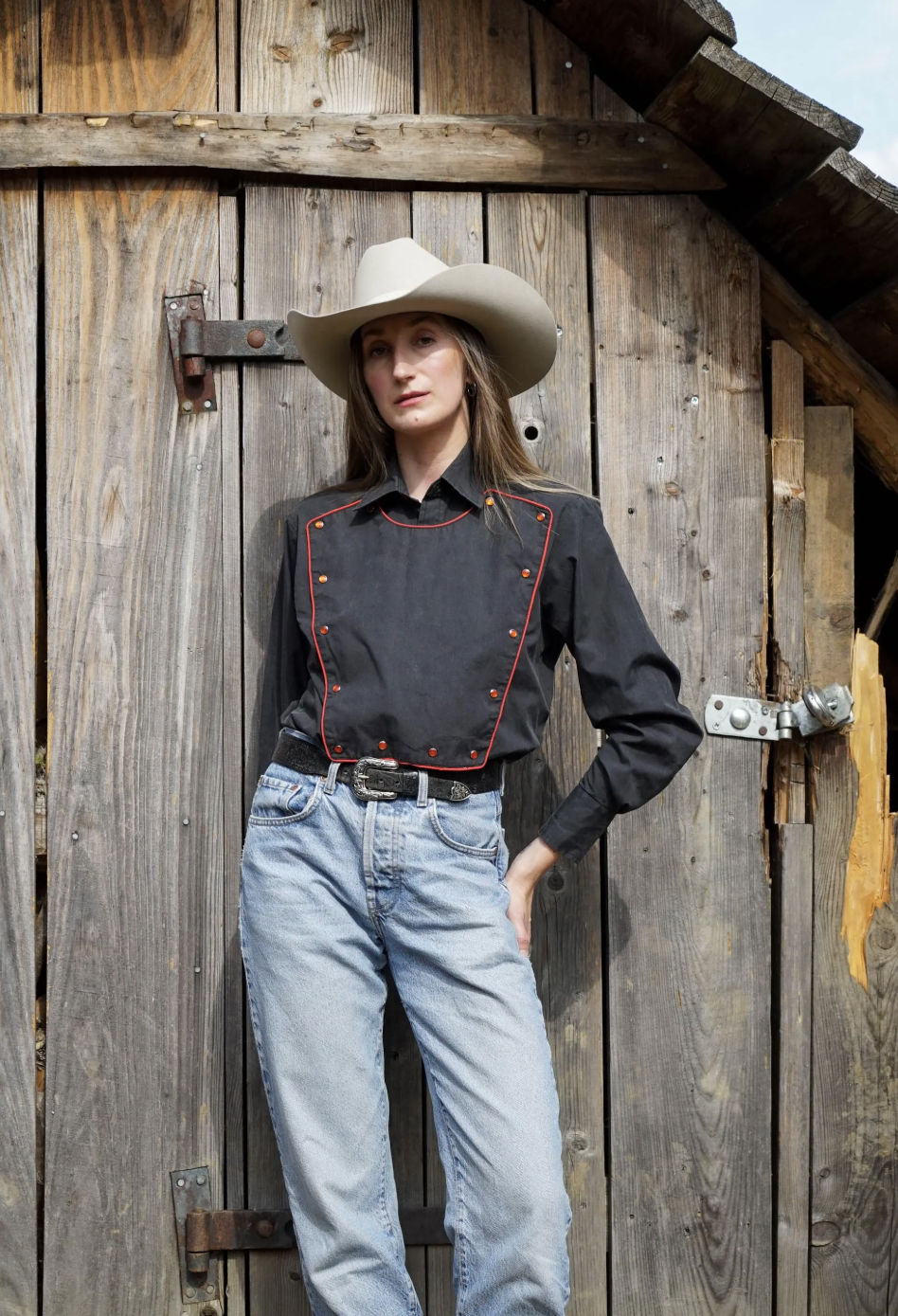
I recently got asked at the market if that ‘chef’s smock shirt’ is still available. I wasn’t aware I’m in the hospitality wares business but this question got me thinking. This (below) is the shirt they were asking about and no, it has nothing to do with chefs (!).
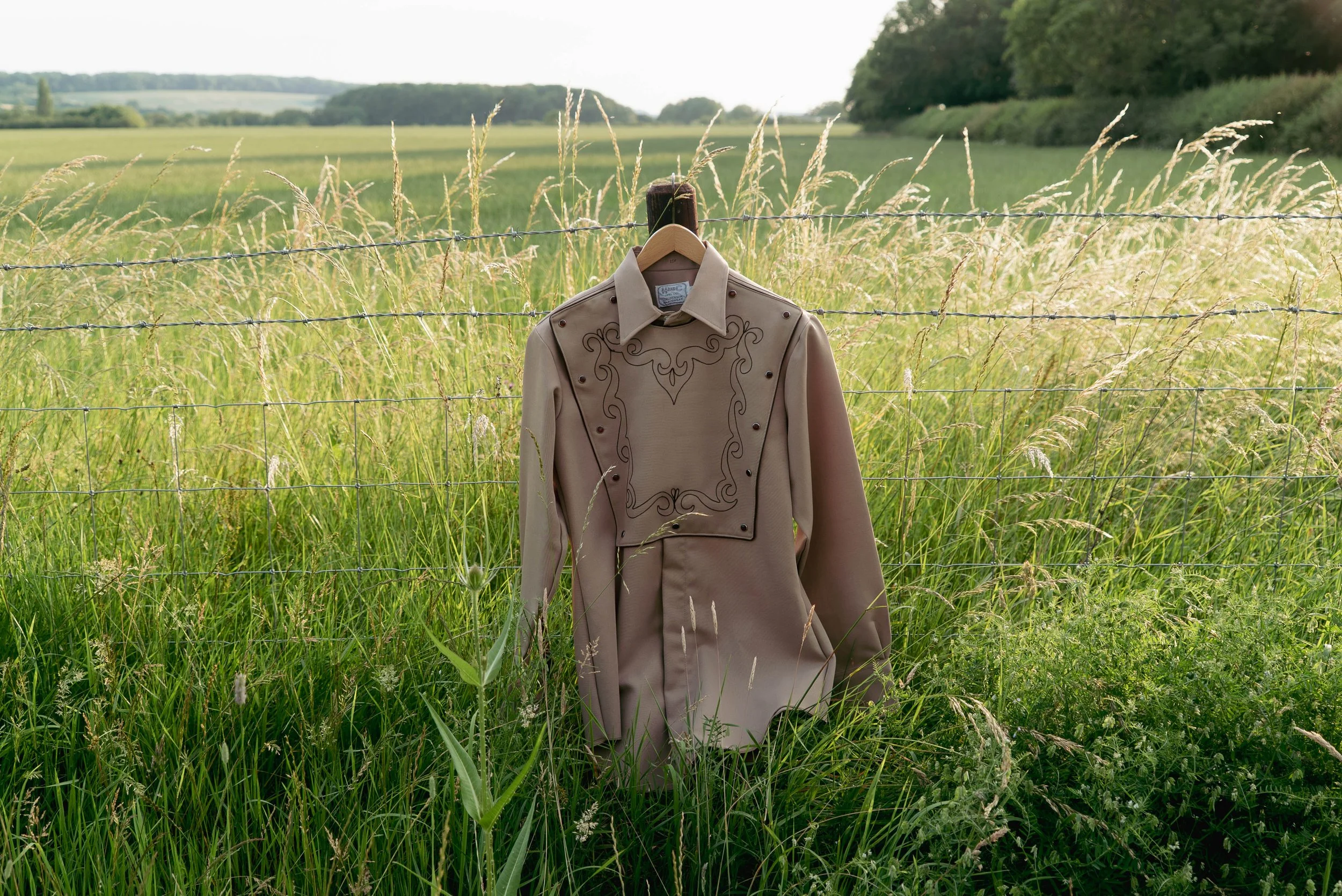
Worn by the OG cowboys, wranglers, and gunslingers, bib shirts have been a staple in workwear for centuries.
The earliest evidence points to the 19th century and UK and US firefighters. Sometime in the early 1800s, when the shirt made its first appearance as outer garment (shirts were considered underwear in Victorian times and a serious man would never go out in public without a jacket or a coat worn over it), a placket front and the double row of button was added in, making such shirt more presentable in public while adding an additional piece of protection, one that could be easily torn off should it catch fire. This was also a smart move from an economical point of view - until 1851, when mass production began, it was easier (and cheaper) to replace just the plastron (bib or shield) than an entire shirt.
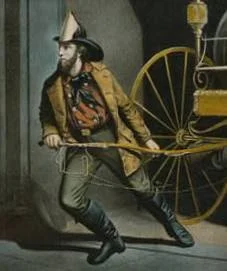
1858 New York firefighter
This style of shirts then got adapted by the working class, as bib worked well as chest protector against the weather and it could be used as a stash (for a tobacco pouch, for example), giving folks easy access to items while keeping their hands free. And since the bib was a central part, one that would be the first one to get dirty, it also became very practical - you could just unbutton and wash it, while still wearing the shirt. Especially handy at times when a working cowboy would own maximum two shirts at the same time.
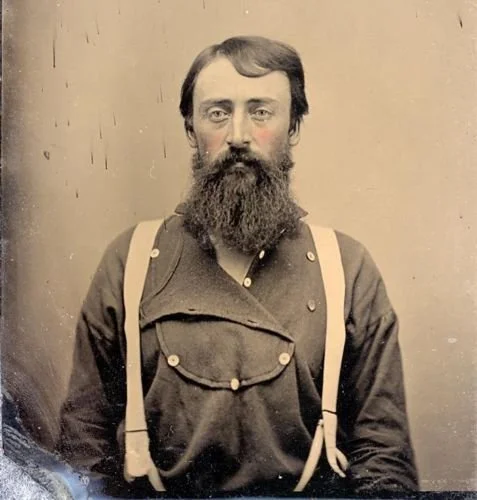
Homemade shirt with rounded plastron, date unknown
At the times of Civil War (1861-1865), bib shirts gained even more popularity. Partially because some of the companies were composed almost entirely out of firemen, but also because they were already rapidly mass produced in the early years of war. And just as firefighters before, soldiers were also looking to glow up their uniforms in front of the folks back home - bib looked very spiffy indeed. Once the war was over, the shirts moved West with the soldiers.
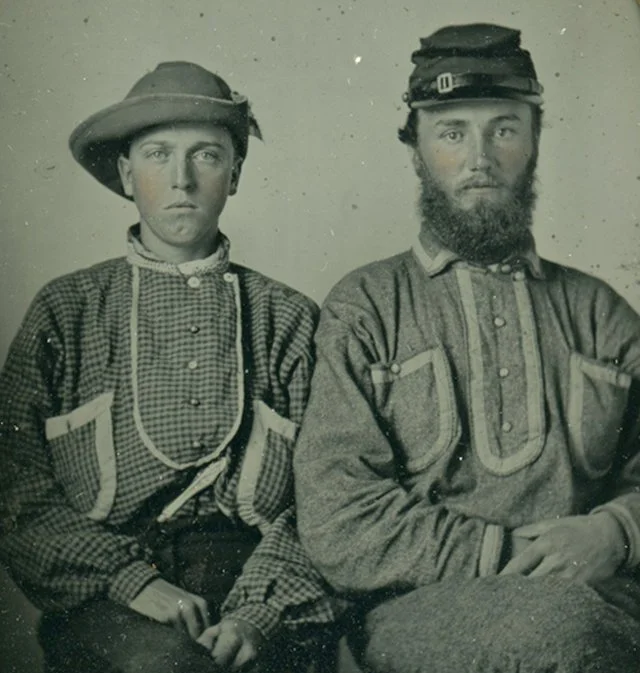
Thomas Issac Duvall & William Duvall, source: /www.civilwarvirtualmuseum.org
’’Cowboys didn’t much care which style of shirt they wore; they wore whatever they could afford or get their hands on.’’
And this is how bib made it to the plains. A still strictly practical item: “A cowboy always wore long sleeves with a three-to-five button placket in the front to keep the cold out in the winter” (source: Beard, Tyler. 100 Years of Western Wear), that was simply made to help him survive extreme conditions.
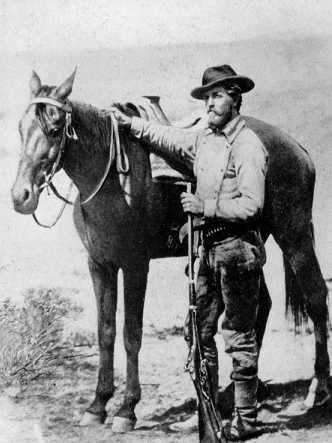
Image from Golden State History
Not enough evidence has been collected throughout this period to confidently say that this type of shirt was indeed popular or not, but from the various pictures from the era, we can see that bib was present in their daily attires. Some sources cite Billie The Kid and Wyatt Earp as fans of this garment, which reinforces what we already know - it was a piece of outfit that was available to all (Billie was an outlaw, Wyatt - a lawman) and depending on the style, it could work as a practical piece or a more presentable one.
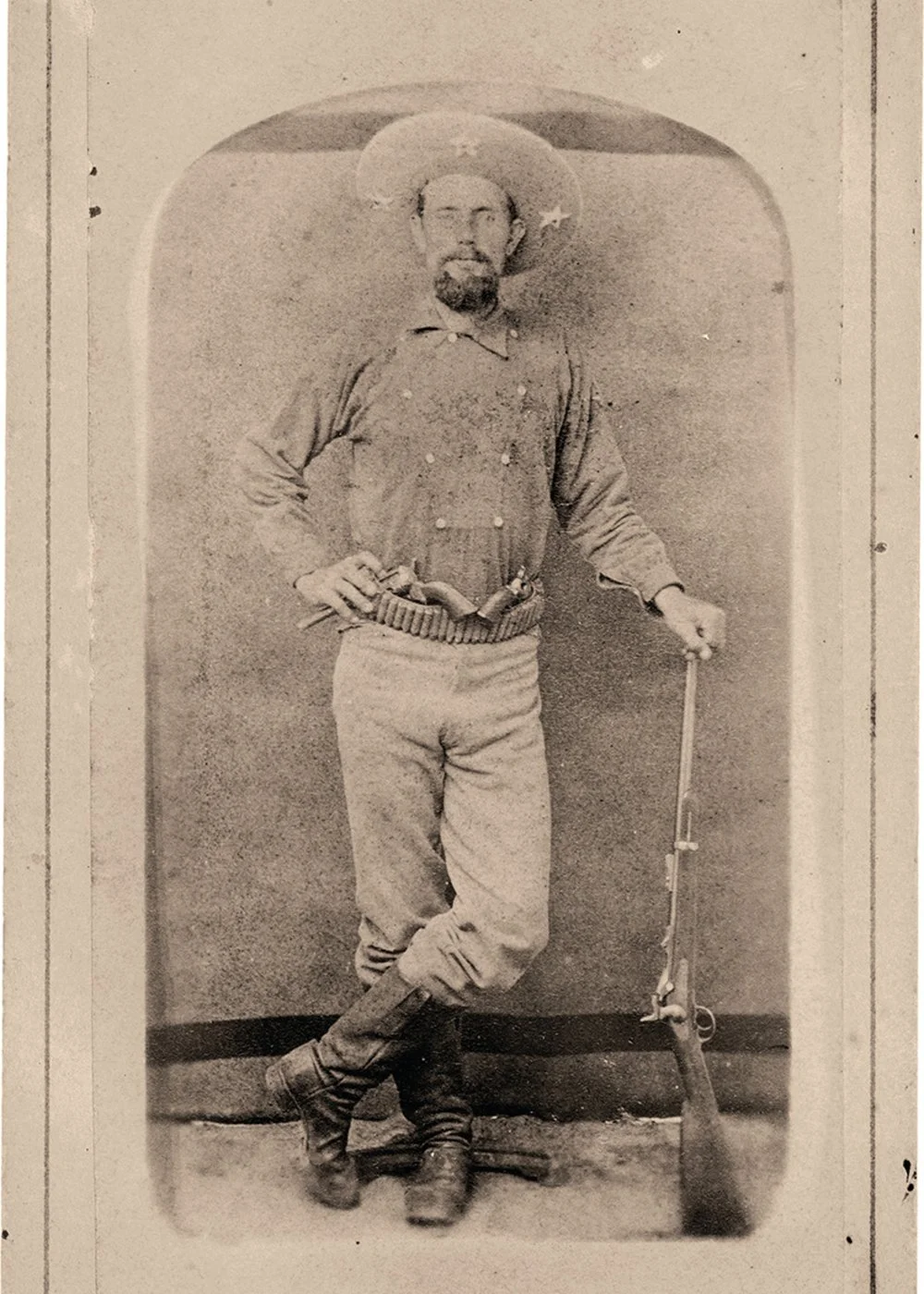
Texas Ranger from the 1870s
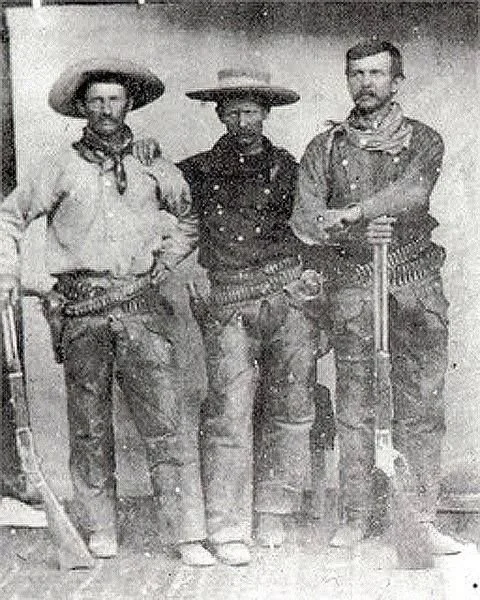
1880s Arizona Cowboys
But everything changed with the boom on Hollywood cowboys in the early 1900s.
Well, everything that a working cowboy wore changed when his attire made it to the silver screen, and bib was not an exemption.
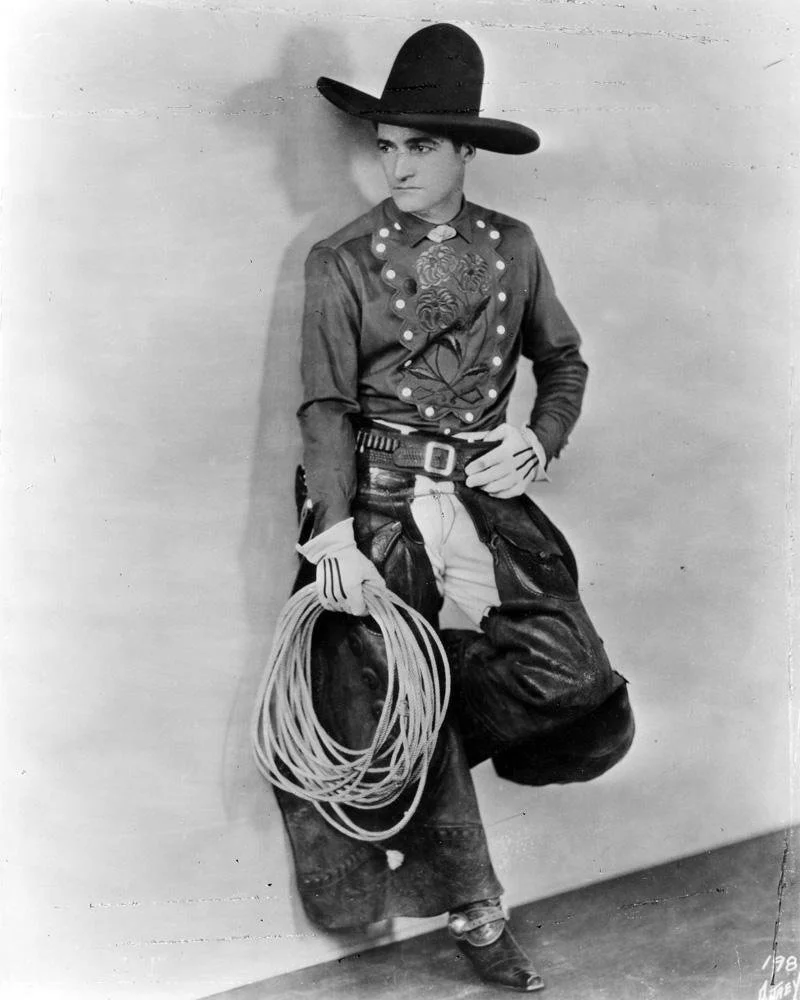
Tom Mix, date unknown
Tom Mix took this style to the next level, wearing boldly embroidered bib shirts -he “reportedly embroidered the flowers himself’’, and since he was sort of a protagonist for the next generation of Hollywood cowboys, it meant that the style was not going anywhere.
It sticked around in the 40s and 50s in both versions -fancy, worn by celebrities, and as a shirt of the OG cowboy in the western movies. Brands like Rockmount or H Bar C would jump on that trend and add bib styles to their catalogues, making it accessible to anyone who wanted to look like their silver screen hero. Interestingly, I haven’t found any evidence of this style of shirt being made for women, though in my reselling career, I happened to flip a few ladies bibs, though they were made in the 70s and 80s.
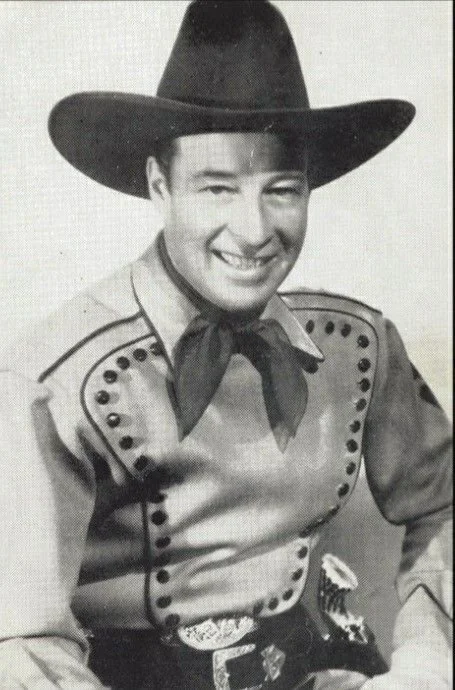
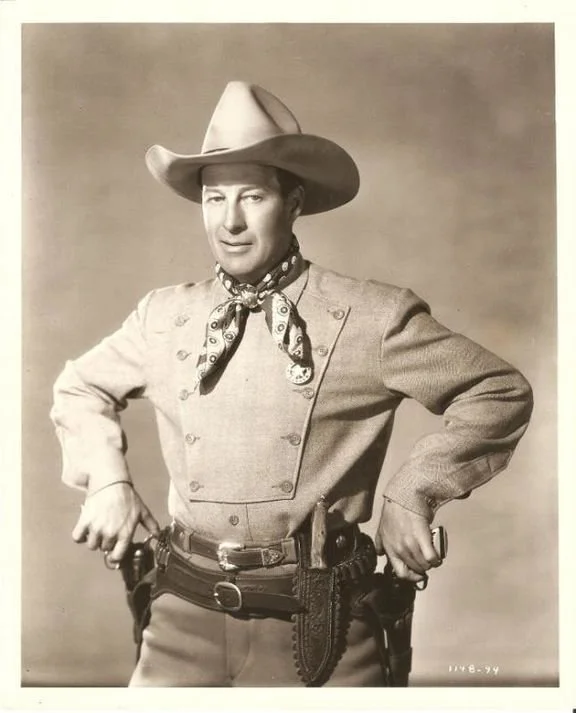
Wild Bill Elliott, a popular American B‑western film star of the 1930s–1950s.
John Wayne seemed to especially like this type of shirt when working on the movies. We can see him rock this cavalry-style outfit in his early pieces like Stagecoach (1939), Red River (1948), Rio Grande (1950) or the later ones, such as The Man Who Shot Liberty Valance (1962).
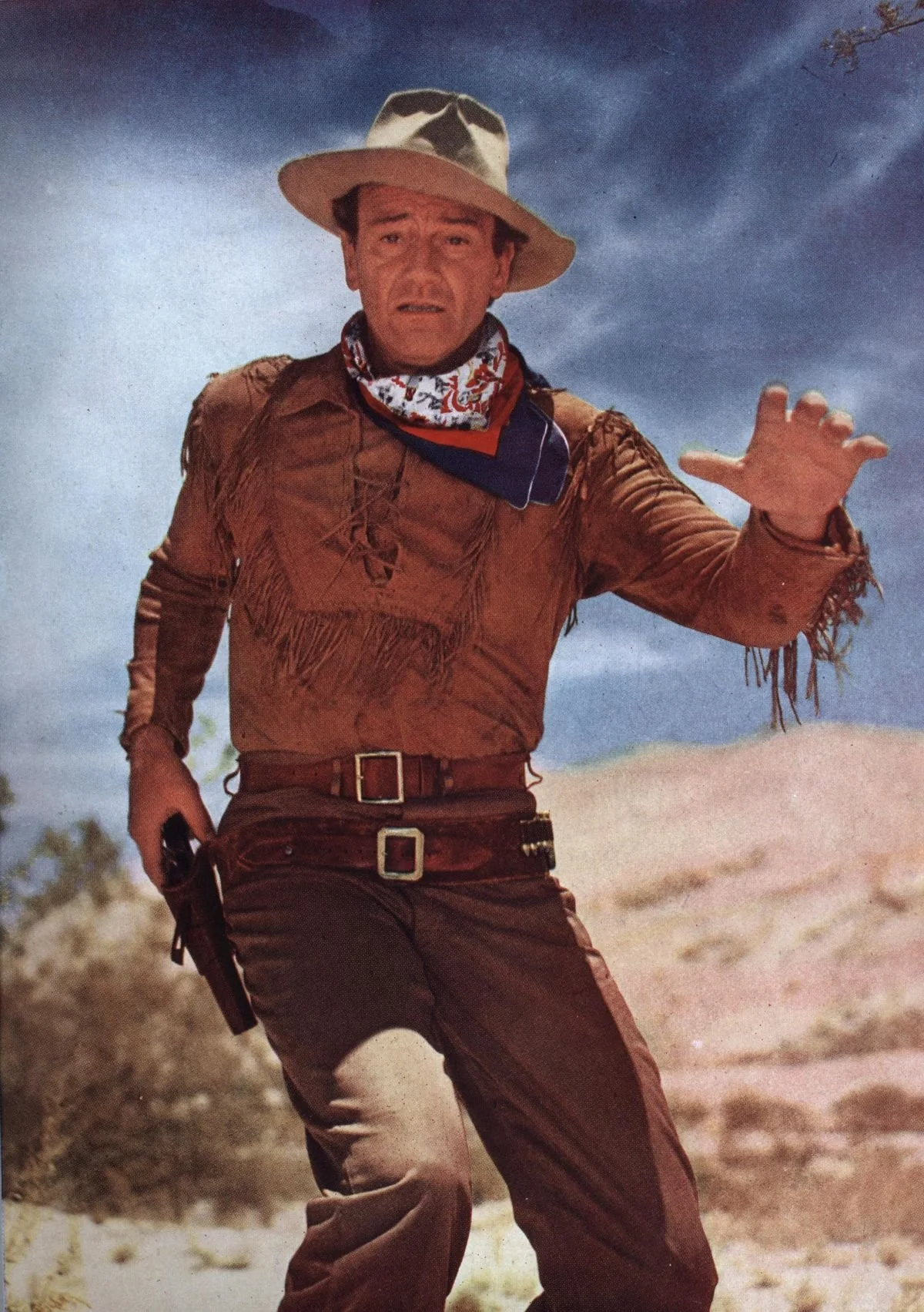
Buckskin bib is something I still need to find!
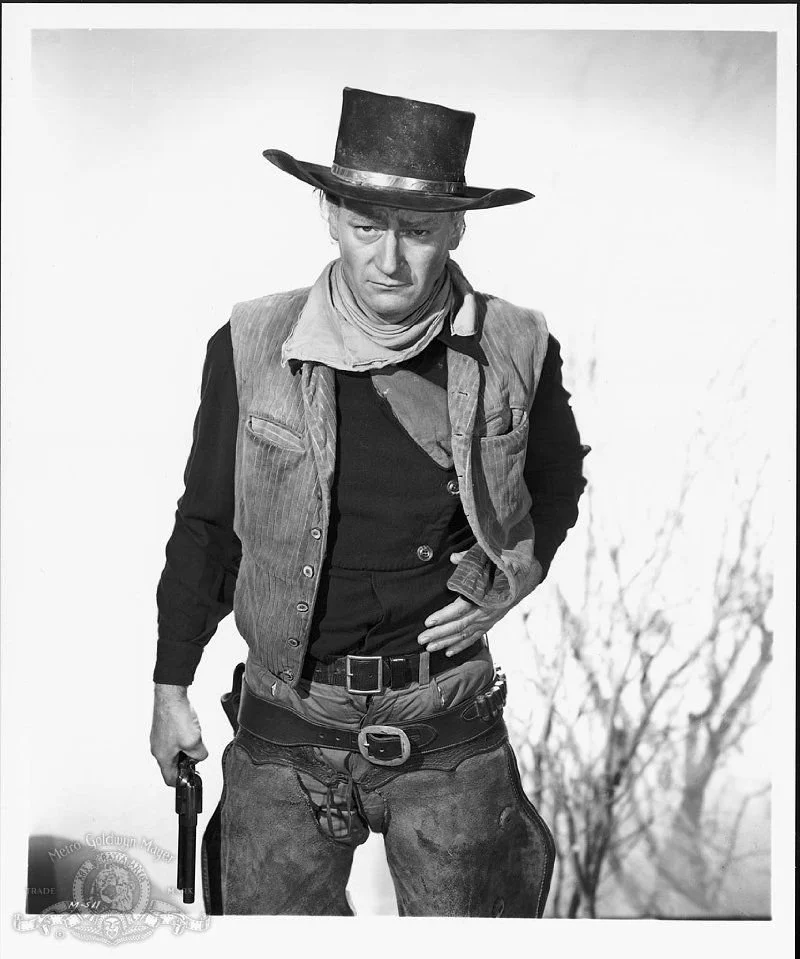
John Wayne in Red River (1948)
And while we’re talking about the golden era of western wear, it’s worth adding that the famous rodeo tailors themselves had their take on the bib. Nudie Cohn, Rodeo Ben and Nathan Turk truly took those pieces to the next level (just like anything else they designed).
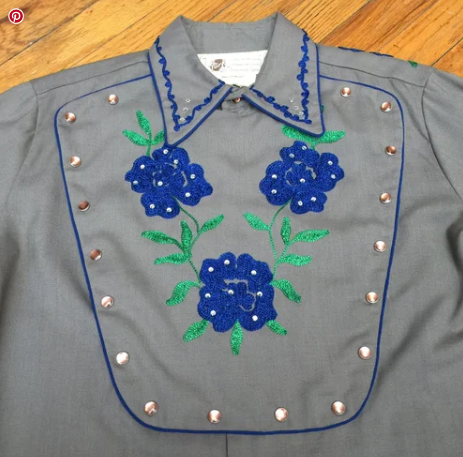
Source: Rare Nathan Turk Bibbed Shirt Pioneer House
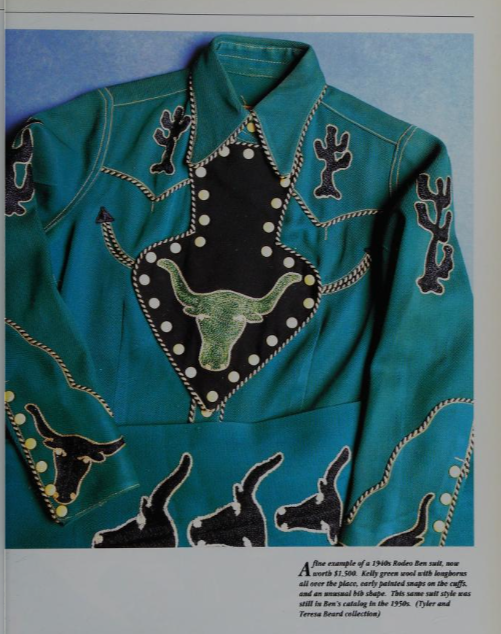
Source: 100 years of Western wear : Beard, Tyler, 1954
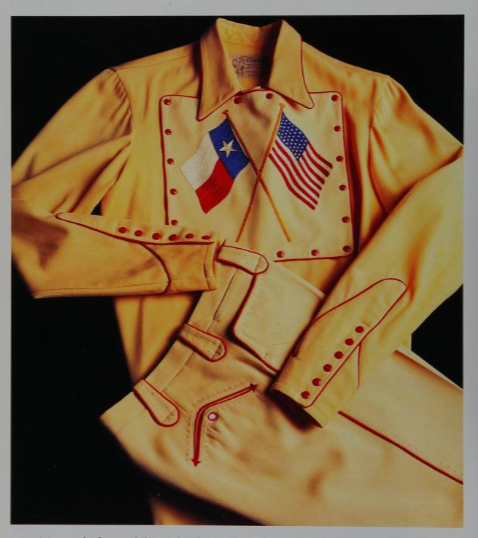
Source: 100 years of Western wear : Beard, Tyler, 1954
And that’s the bib shirt at its finest and now you don’t need to embarrass yourself and called it chef’s smock. The thing with western wear is that it’s so varied and there are almost no rules to what you can do with an item (unless you wear high water jeans; hi, Kayla!).
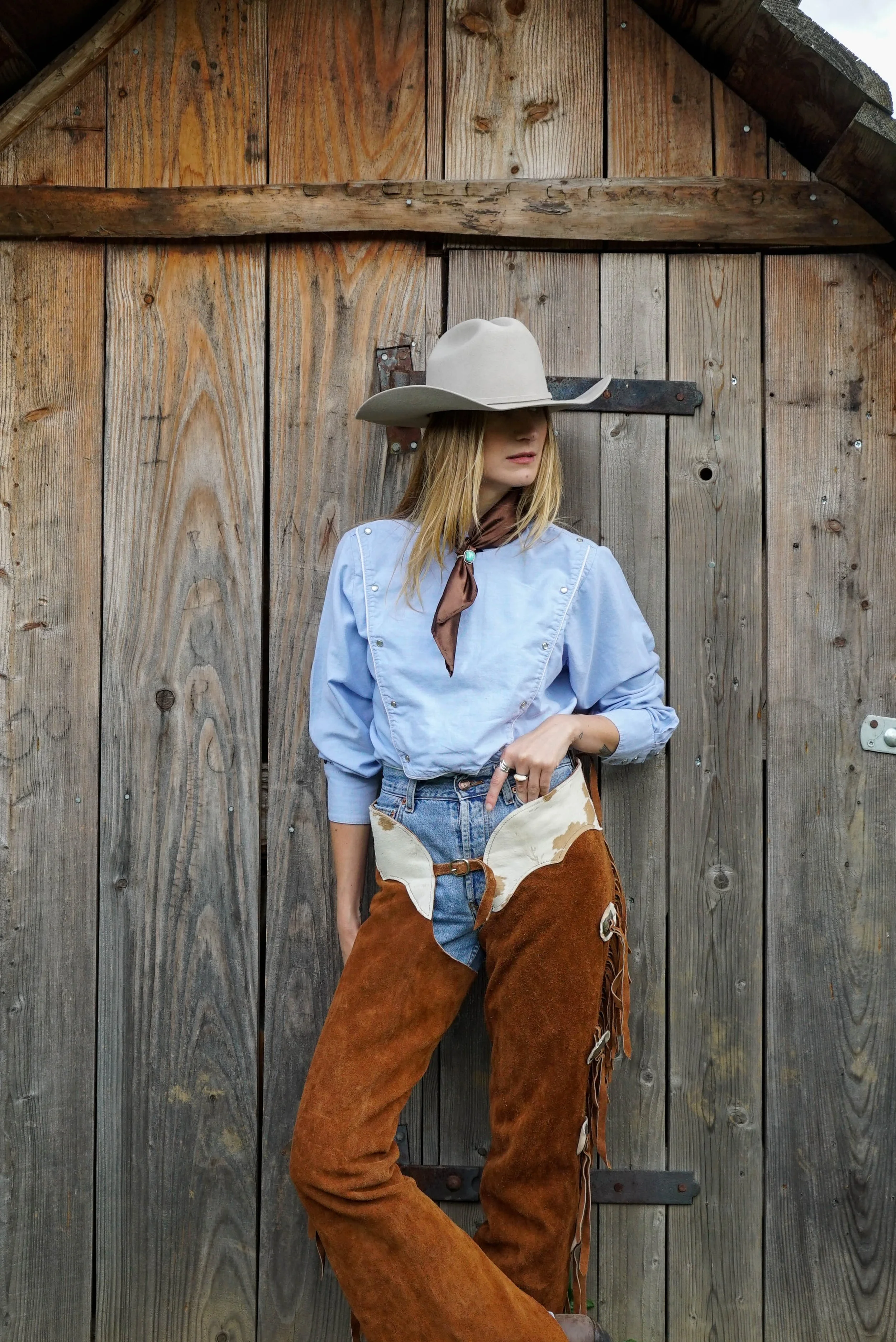
Blue and black shirts sold